

Choroideremia Research Foundation Announces New Research Grants to Advance Understanding and Treatment of CHM

Choroideremia Research Foundation (CRF) Invests in Research to Advance Understanding of Choroideremia (CHM).

Elfride De Baere, MD, PhD, and Bart P. Leroy, MD, PhD.
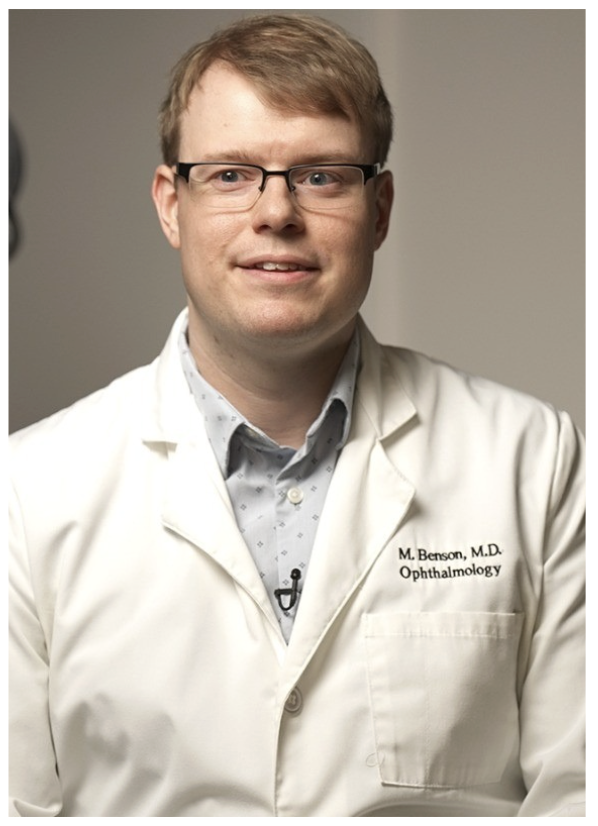
Matthew Benson, MD.

Malia Edwards, PhD, Abigail Fahim, MD, PhD, and Kathleen Boesze-Battaglia, PhD.

Vasiliki Kalatzis, PhD.
CRF’s latest research investments explore the biology of CHM, disease variability, therapeutic targets, and potential new approaches to preserving vision.
SPRINGFIELD, MA, UNITED STATES, September 9, 2026 /EINPresswire.com/ -- The Choroideremia Research Foundation (CRF) is pleased to announce its latest round of scientific research funding, supporting research projects focused on advancing the understanding of choroideremia (CHM) and identifying potential approaches to preserve vision. These research investments span multiple areas of CHM science, from understanding the biological mechanisms that drive disease progression to identifying genetic factors that may influence disease severity and exploring potential therapeutic targets. Award recipients are as follows:
STUDY: MULTIOMICS-CHM: A Multi-omics Framework to Elucidate CHM Variant Effects and Disease Variability in Choroideremia
Co-funded by Foundation Fighting Blindness
Elfride De Baere, MD, PhD
Professor, Dept. of Biomolecular Medicine
Center for Medical Genetics, Ghent University Hospital, Ghent, Belgium
Bart P. Leroy, MD, PhD
Professor, Ophthalmology & Ophthalmic Genetics
Ghent University Hospital, Ghent, Belgium
AIM: To investigate why individuals with CHM experience highly variable rates of disease progression by identifying genetic and molecular factors that may protect against or accelerate vision loss. Using a multi-omics approach, researchers will analyze DNA, RNA, and protein interactions across thousands of individual cells, with additional study of patient-derived retinal pigment epithelial cells from individuals with exceptionally mild or severe disease. The long-term goal is to establish a framework that can help clinicians predict disease progression, interpret complex genetic findings, and identify targets for individualized interventions, supporting the development of precision medicine approaches for CHM.
STUDY: Natural History of Individuals with Retinal Degeneration Due to Mutations in the CHM Gene
Matthew Benson, MD
Assistant Professor, Department of Ophthalmology and Visual Sciences
University of Alberta, Canada
AIM: To describe the natural history and progressive clinical course of Choroideremia (CHM) by establishing a comprehensive profile of how visual function and retinal structure decline over time. Using a multi-center retrospective review of medical records from 1995 to 2025, researchers will analyze longitudinal data on visual acuity, visual fields, and OCT imaging from approximately 300 genetically confirmed male patients across the University of Alberta and three additional tertiary centers. The long-term goal is to establish a robust baseline dataset that can help clinicians understand disease progression, inform future clinical trial design, and support the development of prospective therapeutic interventions for CHM.
STUDY: Development of New CHM Mouse Models
Malia Edwards, PhD
Associate Professor of Ophthalmology
Wilmer Eye Institute, Johns Hopkins Medicine, Baltimore, MD
Abigail Fahim, MD, PhD
Clinical Assistant Professor, Ophthalmology and Visual Sciences
Kellogg Eye Center, University of Michigan
Kathleen Boesze-Battaglia, PhD
Professor of Biochemistry and Biophysics
University of Pennsylvania, Philadelphia, PA
AIM: To better define the clinical and histological pathology of choroideremia by studying choroideremia conditional knock out mice. The investigators will be creating different mice by targeting different cell types to help determine which model best replicates the progression of retinal and RPE degeneration in choroideremia patients. The study will involve clinical imaging and vision testing of the mice at various ages followed by careful assessment of the retinal structure. This will determine what aspects of choroideremia are accurately mimicked in the mouse models, information that will be valuable in testing therapies.
STUDY: Unravelling CHM Pathophysiology & Identifying Novel Therapeutic Targets
Co-funded by CRF Canada and France Choroïdérémie
Vasiliki Kalatzis, PhD
Research Director
Institute for Neurosciences of Montpellier, INSERM, France
AIM: To investigate the biological mechanisms underlying choroideremia and identify potential therapeutic targets that could slow disease progression. Building on preliminary findings, this study will examine whether dysregulated L-type calcium channels contribute directly to CHM progression by affecting important retinal functions, including waste removal through phagocytosis and growth factor secretion. Researchers will also develop lab-grown choroid tissue to investigate whether damage to photoreceptors and the choroid occurs independently or as a secondary effect of retinal pigment epithelial dysfunction. By better understanding these disease mechanisms, the study aims to identify new pharmacological targets that could help slow vision loss while permanent treatments, such as gene therapy, continue to be developed.
##
About Choroideremia:
Choroideremia (CHM) is a rare inherited form of blindness affecting approximately 1 in 50,000 people. Due to its X-linked inheritance pattern, males are most severely affected, with females usually experiencing much milder visual impairment. Symptoms begin in early childhood, with night blindness and restriction of visual field being the earliest noticeable effects, eventually progressing to complete blindness. An estimated 6,000 people in the United States and 10,000 in the European Union are impacted by choroideremia. There are currently no approved treatments for choroideremia. For more information, visit curechm.org/what-is-choroideremia/
About the Choroideremia Research Foundation Inc.:
The Choroideremia Research Foundation (CRF) was founded in 2000 as an international fundraising and patient advocacy organization to stimulate research on CHM. Since its inception, the CRF has provided approximately $6 million in research awards and is the largest financial supporter of CHM research worldwide. Research funded by the CRF has led to the development of a CHM animal model, the pre-clinical production of gene therapy vectors, and the CRF Biobank which stores tissue and stem cell samples donated by CHM patients. For more information, or to make a donation to support research, visit curechm.org.
Reagan Devinney
Choroideremia Research Foundation Inc
+1 800-210-0233
email us here
Visit us on social media:
LinkedIn
Bluesky
Instagram
Facebook
YouTube
X
Legal Disclaimer:
EIN Presswire provides this news content "as is" without warranty of any kind. We do not accept any responsibility or liability for the accuracy, content, images, videos, licenses, completeness, legality, or reliability of the information contained in this article. If you have any complaints or copyright issues related to this article, kindly contact the author above.
